
The buyer journey has always involved research. What has changed is where that research happens, how it is conducted, and what kind of evidence influences its conclusions.
Before a prospect contacts your company today, they have already searched multiple times, compared your organization against competitors, read or watched coverage they found along the way, and — increasingly — asked AI-powered research tools to synthesize what they found. By the time they fill out a contact form or pick up a phone, they have formed a significant portion of their opinion about your credibility.
The PR-to-Sales Bridge was always about the space between awareness and conversion. In the AI search era, that space is wider, more complex, and more consequential than it has ever been.
How AI Search Changes the Buyer Journey
AI-powered research tools — Perplexity, Google AI Overviews, ChatGPT, and others — do not just list sources. They synthesize information from across the web and present a composed answer to the buyer’s question.
This changes the PR-to-Sales Bridge in several important ways:
Credibility is evaluated before the first conversation. A buyer who uses AI tools to research your organization will receive a summary that reflects the quality, accuracy, and authority of your digital presence — your website, your earned media coverage, your Anchor Hub content, your structured data. If that summary is thin, generic, or absent, the first conversation starts from a deficit.
Earned media has a longer operational life. Coverage that established authority with readers at the time of publication now also surfaces in AI-generated research summaries long after publication. A strong profile story from two years ago continues to influence buyer evaluation today — if the organization’s digital infrastructure is structured to support that longevity.
The question the buyer is actually asking matters more. AI search is conversational and specific. “Who are the leading PR firms in St. Louis that work with financial services companies?” is a different query than “AMM Communications” — and it requires different content infrastructure to show up in both.
What the Bridge Looks Like Now
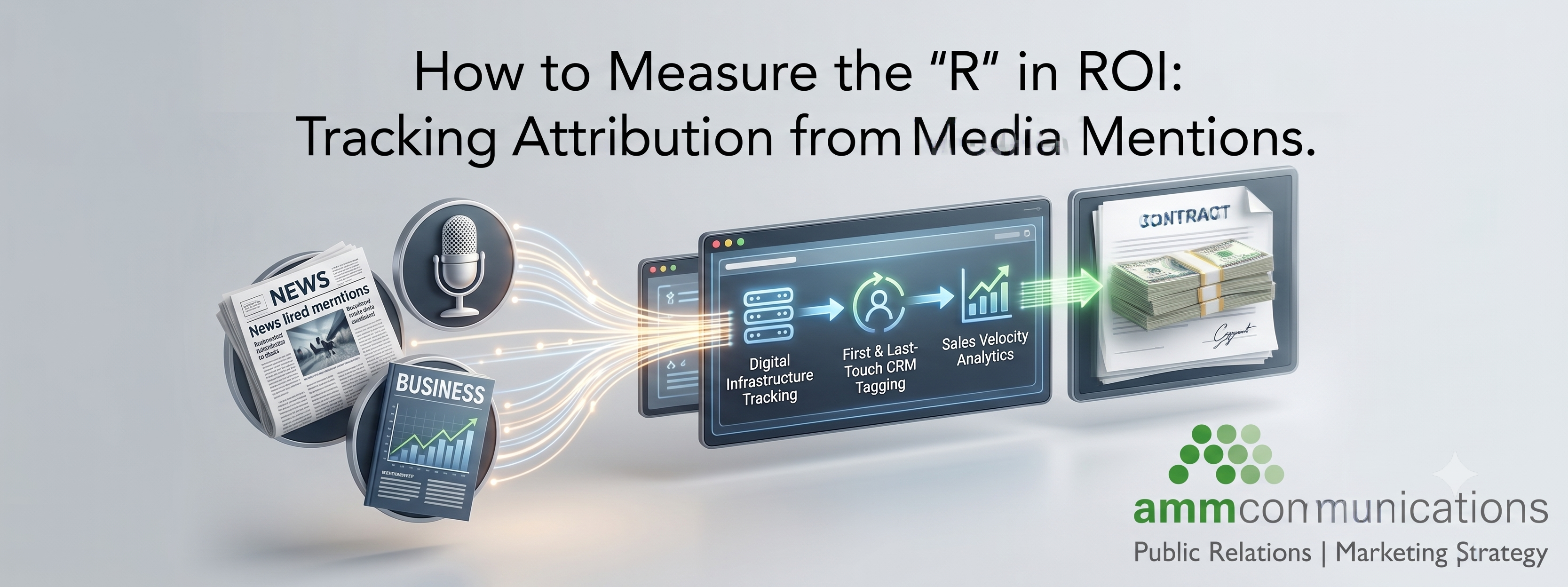
In the Archway ROI™ framework, the PR-to-Sales Bridge now spans a multi-stage communications system:
AI-search-ready website — A foundational asset with entity clarity, question-based content, structured data, and sufficient depth to be accurately represented in AI-generated summaries.
Anchor Hub evidence — Comprehensive knowledge center pages that establish genuine subject-matter authority on the topics relevant to your buyers’ research questions.
Earned media validation — Third-party coverage that provides AI systems — and the human buyers who rely on them — with credible, external confirmation of your expertise and track record.
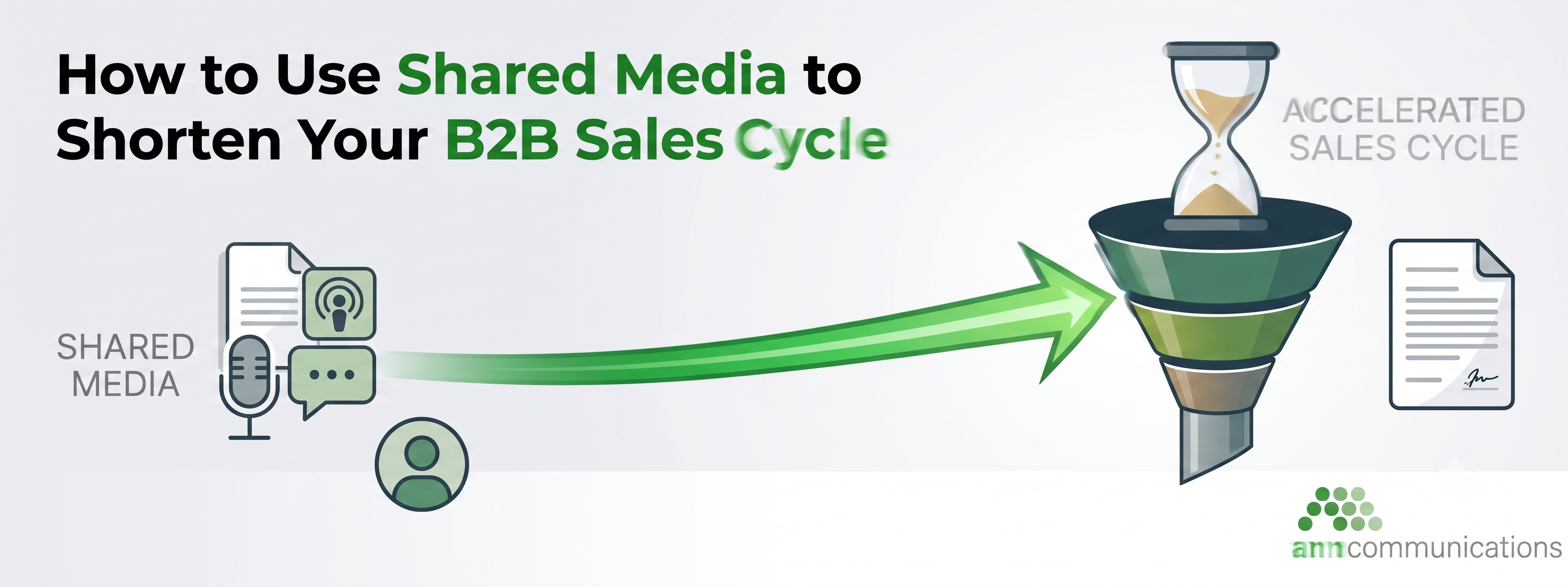
PESO amplification — Systematic repurposing of earned media across Paid, Shared, and Owned channels, ensuring that each earned win extends its reach and its life across the buyer’s journey.
Conversion path — A clear, credible path from research to contact, built with the understanding that a buyer arriving from AI-assisted research is already partially qualified and looking for confirmation rather than introduction.
The Measurement Framework
Archway ROI™ tracks the PR-to-Sales Bridge across four layers of outcomes:
- Visibility — Are we earning coverage, ranking in relevant searches, and surfacing in AI-generated responses?
- Authority — Is the organization’s subject-matter credibility building over time across digital and media environments?
- Demand — Are communications activities generating qualified inquiries, web traffic from target audiences, and engagement with anchor content?
- Commercial indicators — Are there patterns connecting communications activity to sales pipeline, proposal requests, and new client acquisition?
The measurement approach is not about proving that a single press placement caused a sale. It is about demonstrating that the communications system is functioning — that visibility is growing, authority is building, and demand signals are strengthening.
The Fundamental Logic Remains
The channels have changed. The buyer’s research behavior has changed. The role of AI systems in shaping first impressions has changed significantly in a very short period of time.
But the fundamental logic of the PR-to-Sales Bridge — that earned trust, built systematically through credible communications, shortens sales cycles and improves close rates — has not changed.
Buyers trust sources they have heard of, read about, and encountered across multiple independent contexts before they ever contact a sales team. The communications system that creates that familiarity is worth building deliberately, and worth measuring rigorously.
Explore how the PR-to-Sales Bridge works in the Archway ROI framework →