There is a predictable wall that B2B firms hit as they grow. At $5M, the founder’s personal relationships, credibility, and hustle are the engine. Every major deal traces back to “someone who knows Ed” or “someone Ann Marie introduced me to.” It works — until it doesn’t.
Scaling from $5M to $50M requires a fundamental shift: moving from founder-led sales to market-led growth. This means your firm’s authority, credibility, and pipeline-generating power must live in the brand — not just in the founders’ networks. That transition requires a systematic approach to PR and thought leadership.
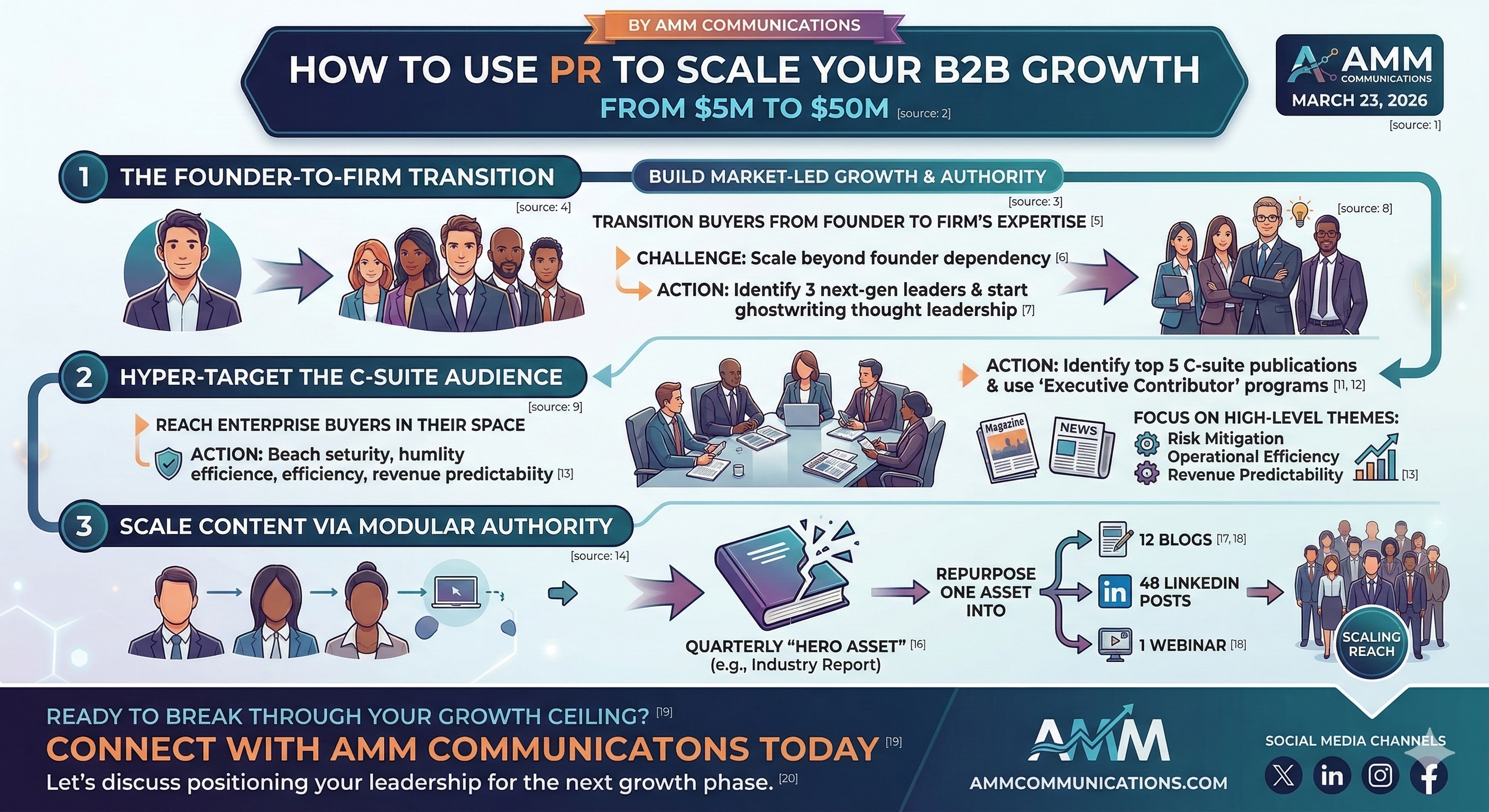
Step 1: The Founder-to-Firm Transition
At $5M, people buy the founder. At $50M, they buy the firm’s expertise.
The Problem: If every media interview request comes in asking for the founder personally, and if every referral comes through the founder’s direct network, then the firm cannot scale beyond the founder’s personal bandwidth. You’ve built a personal brand, not a company brand.
The How-To:
- Identify three subject-matter experts (SMEs) within your firm beyond the founders. These may be senior practitioners, specialized directors, or high-potential rising leaders.
- Develop a distinct “point of view” for each SME tied to a specific service line or market. Not generic expertise — a specific, defensible perspective that your competitors don’t hold.
- Begin placing each SME in earned media — local business journals, industry trade publications, podcast interviews — as the spokesperson for their specific domain.
- Transition client case studies from “founder-managed” to “firm-delivered.” The narrative shifts from “Ed guided us through this” to “AMM Communications’ methodology delivered this outcome.”
Within 18 months, your firm’s authority is no longer contingent on any single person’s availability.
Step 2: Hyper-Target the “C-Suite” Audience
Enterprise buyers don’t hang out in the same places as small business owners. As you scale, your media strategy must reach the right rooms.
The Problem: Many growing B2B firms continue using the media strategy that worked at $5M — local newspaper features, chamber of commerce newsletters, community announcements. These channels reach the community, but they don’t reach the CFO of a $75M manufacturing company evaluating a six-figure professional services contract.
The How-To:
- Audit your target buyer’s media diet. Where do your ideal $50M+ clients get their information? Industry-specific trade journals? National business publications? LinkedIn? Podcast subscriptions? Ask your best current clients — the answers are usually surprising.
- Build a “Top 20 Publications” target list and create a strategic pitch calendar for each. These are the outlets your ideal prospects actually read.
- LinkedIn Executive Program: At the $50M level, your buyers are on LinkedIn. Develop a structured program for your senior leaders to publish one substantive article per month. Not promotional content — genuine insight that the publication’s readers would find valuable independent of any sales pitch.
- Industry Associations: Identify the top two or three associations where your ideal buyers congregate. Pursue board positions, speaking slots, and award nominations within those bodies. This is not vanity — it is direct access to your exact target buyer at the highest trust level.
Step 3: Scale Your Content via “Modular Authority”
You don’t need more content; you need smarter content.
The Problem: Growing firms often respond to scale by simply producing more — more blog posts, more social media, more press releases. Volume without architecture is noise.
The How-To — The “Content Pillar” System:
- Identify four to six annual themes directly tied to your revenue-generating service lines. These become your “Content Pillars.”
- For each pillar, produce one flagship piece of content per quarter. This might be an original research report, a comprehensive guide, or a C-suite interview series. This flagship piece is invested — 1,500 to 2,500 words, deeply reported, genuinely valuable.
- Explode each flagship into “modular” units: five LinkedIn posts, one podcast segment pitch, two email newsletter entries, one media pitch angle, and three short-form video scripts. All derived from the same flagship.
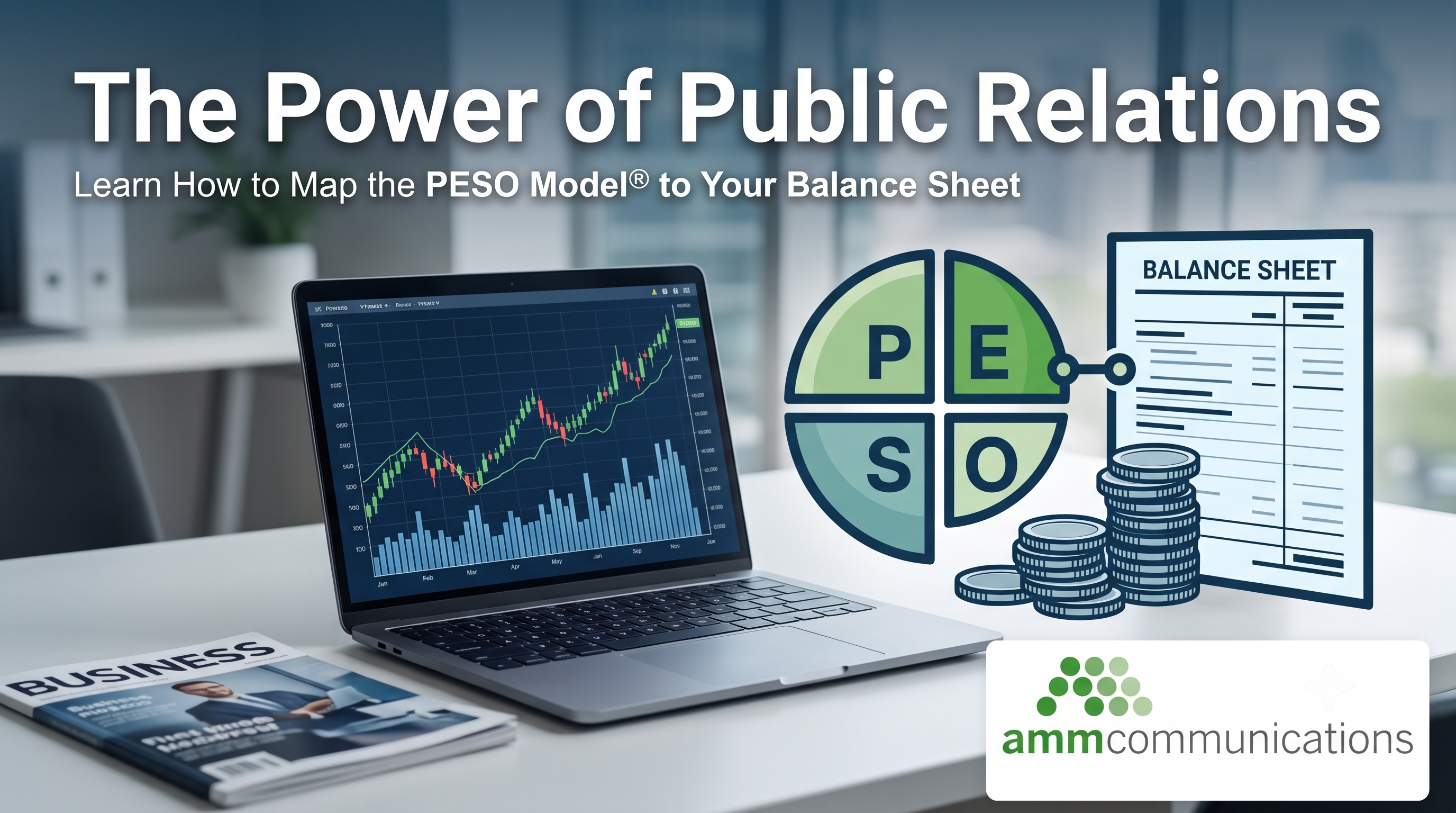
- Distribute via PESO: Earned channels (pitch the flagship to media as a source), Owned channels (publish on your website), Shared (LinkedIn distribution by your SMEs), and Paid (targeted amplification to your C-suite audience).
The result: the appearance of ubiquity — your firm seems to be everywhere — achieved with a focused, disciplined content investment.
The Compounding Effect
What makes this approach powerful at the $5M–$50M scale is compounding. Each 90-day cycle builds on the last. Media relationships deepen. SME credibility grows. Your Share of Voice in key publications increases. The “Branded Search Dividend” climbs quarter over quarter.
By Month 18, your firm is no longer chasing deals. Deals are finding your firm — because your brand has become the authoritative answer to the problem your best prospects are actively searching for.
That is market-led growth. That is the transition from $5M to $50M.
Ready to break through your current growth ceiling? Connect with AMM Communications today. We’ll assess where your brand authority currently stands, identify the specific gaps holding your growth back, and design the PR strategy that gets your firm to the next level.